
Operations Consulting


The firm is growing. It does not feel like it should.
Advisory firm founders who call Atlas Park are rarely certain they need a fractional COO. They know something is wrong. They are not always sure what to call the fix.
If the cause is not yet clear, start here.
A fractional COO solves an execution and accountability gap. Not a strategy gap.
If the firm does not know where it is going, a fractional COO is not the answer. If the firm knows exactly where it is going but cannot get the team to execute consistently, cannot get decisions made at the right level, and cannot make growth feel less like pressure, that is the gap this role fills.
The firms that need this work are not broken. They have grown faster than their systems were built to handle. The business the firm is today is not the business the infrastructure was designed to run.
These are the patterns that appear inside advisory firms before they bring in fractional COO support. They are not abstract. They are specific to how wealth management firms at the $200M to $1B stage actually operate.
The founder is still the answer to too many questions.
When a team member hits a situation slightly outside the normal flow, they stop and wait. When a client has an unusual request, it goes to the top. When a new workflow gets introduced, the team runs it through the founder before they trust it. This is not a people problem. It is a structure problem. The firm has not built the decision-making infrastructure that lets the team operate without a constant line back to one person.
The client experience depends on who is handling it.
Two clients onboarded in the same month had different experiences. Not because the team is inconsistent in effort, but because the process is inconsistent in design. One relationship manager runs onboarding differently than another. Handoffs between the planning team and the service team shift depending on the week. The firm’s reputation is stronger than its systems, and eventually that gap shows up in a client relationship.
Workflows exist on paper but not in practice.
The firm has documented processes. Some are even in Redtail or Wealthbox. But if you asked three people on the team to walk you through the same workflow, you would get three different answers. Documentation is not the problem. No one owns whether the workflows are being followed. No one is checking. The accountability structure behind the documentation was never built.
The CRM holds data but does not drive behavior.
The platform was set up, possibly customized, and the team is using it. But it is functioning as a record-keeping tool. Tasks are not closed on time. Follow-up cadences are inconsistent. The data does not reflect what is actually happening in client relationships. When a CRM is working the way it should, a manager can open it and know exactly where every relationship stands and what the next action is. When it is not, the manager has to ask.
The team grew. Clarity did not.
Staff was added to solve a capacity problem. Six months later the capacity problem persists, and now there is also confusion about who owns what. Job descriptions exist on paper. In practice, work finds the person who does it, not the person who should. The org structure describes a firm from two years ago and the business has grown around it without anyone redesigning it.
Growth feels heavier than it should.
At $150M the firm felt manageable. At $300M it feels like running faster just to stay in place. New clients create pressure instead of momentum. The founder is working harder than ever and the business is not running better for it. That feeling is not a mindset issue. It is what happens when revenue scales and operating structure does not.
You have tried to fix it before and it did not hold.
A consultant came in. Workflows were documented. A new project management tool was introduced. Six months later the team was back to old habits. This is the clearest signal. The problem was never a lack of information or tools. Implementation requires someone accountable for whether it holds, and that person was not part of the engagement.
This matters as much as the indicators above.
Below $100M in AUM with a team of fewer than four people, often, the complexity does not yet require embedded COO-level leadership. The problems are real but more contained. Atlas Park’s Advisory Access engagement is built for firms that need to solve a specific operational problem without a longer retained commitment.
A fractional COO is also not the answer if the firm already has a strong internal operations leader with the authority and trust to drive change. In that case, targeted project support may be what creates movement, not ongoing embedded leadership.
The firms that get the clearest return from this work are managing $200M to $1B in AUM, have a team of five or more, and have hit a point where operational strain is limiting what the firm can do next.
The pattern is consistent across firms at this stage. Revenue grew. The team grew. Complexity grew. The systems did not, because there was never a dedicated operational leader whose job it was to redesign the infrastructure as the business changed.
By $600M to $1B that gap typically involves multiple teams, multiple service models, and coordination challenges that require a higher level of embedded leadership to address. The problem is the same. The scope is larger.
The first shift firms notice is rarely the one they expected.
It is not the new workflow or the CRM cleanup. It is the meeting structure. When someone in the firm is responsible for holding the team accountable to what was agreed and bringing operational visibility into leadership conversations, the way decisions get made starts to change. Work stops piling up at the top. The founder starts to see the business rather than running it.
From there the rest follows. Workflows get adopted because there is accountability behind them. Onboarding becomes consistent because the process is owned, not just documented. The CRM starts functioning as an accountability system because someone is actually tracking it.
The firms that describe this as the thing that finally held are not the ones where everything was broken. They are the ones where everything was almost working and the gap between almost and actually was costing them capacity, growth, and the ability to lead.
Atlas Park provides embedded fractional COO services for independent wealth management firms and RIAs managing $200M to $1B in AUM.
The OPS Strategy Call is a conversation about where pressure is showing up, what has already been tried, and whether this engagement is the right next step. If it is not, Atlas Park will say so. The goal is to find what will actually create traction, not to fit every firm into the same model.
The clearest indicators are founder dependency that limits how fast the firm can move, inconsistent client experience across the team, workflows that exist but are not being followed, and a CRM that stores information without driving accountability. If the firm has tried to fix these problems before and the fixes did not hold, that is the strongest signal that embedded operational leadership is what is missing.
The fit is strongest for firms between $200M and $1B in AUM with a team of five or more people, where operational complexity has grown faster than the infrastructure built to manage it. Below $100M, the problems are real but more contained and typically better served by a project-based engagement, under our Advisory Access framework.
A fractional COO manages execution. They work inside the firm’s existing team and technology, build accountability structures, drive workflow adoption, and stay embedded until the new operating model holds. A consultant identifies what needs to change and recommends how. The fractional COO makes sure it actually changes.
A director of operations manages execution within an existing structure. A fractional COO builds and redesigns the structure itself. For firms where the operating infrastructure was never built for the size the firm has become, a director of operations hired into that environment inherits the same constraints the founder is already dealing with. The fractional COO fixes the foundation first.
Meaningful operational change typically appears within the first 60 to 90 days. The first phase identifies where execution is breaking down and where founder dependency is concentrated. Workflow redesign and accountability system implementation take 90 to 180 days to fully embed across the team. The operating foundation is in place within six to twelve months.
Advisory Access is built for firms that need to solve one meaningful operational problem without stepping into a longer retained engagement. If the issue is specific and project-scoped, Advisory Access is the right starting point. If the operational gap is structural and showing up across multiple areas of the business, a fractional COO engagement is what will actually address it.
Wealth management firms managing $200M to $1B in AUM with teams of five or more people are the typical fit. These firms have grown beyond what a founder-led operational model can support but are not yet at the size where a full-time COO hire makes financial sense. Atlas Park works exclusively in this space.
Atlas Park Consulting provides fractional COO services for independent wealth management firms and RIAs managing $200M to $1B in AUM across the United States. Every engagement is embedded, not advisory.
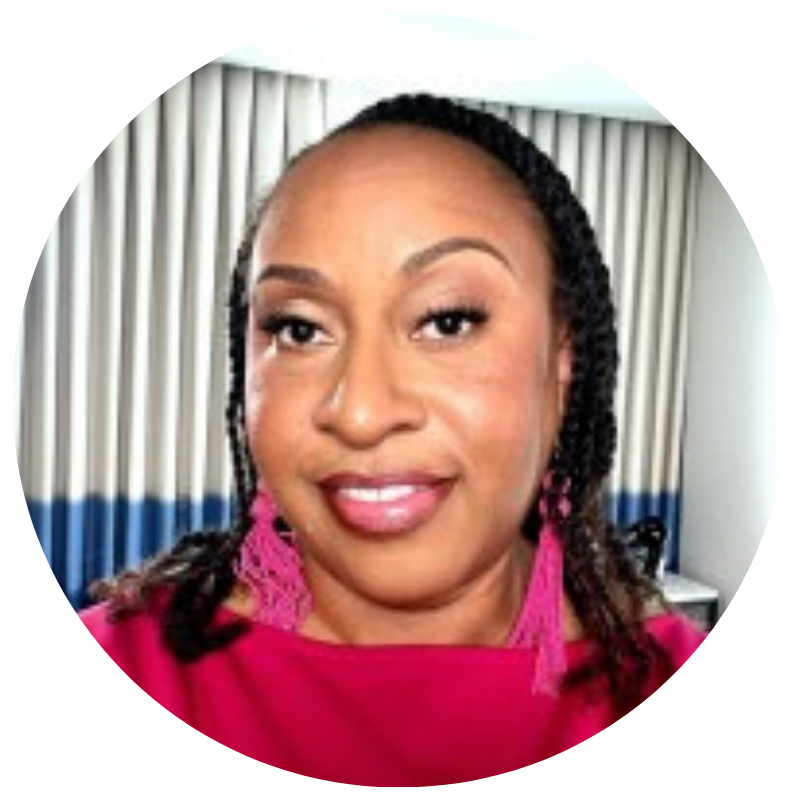
Cameo Roberson is the CEO of Atlas Park Consulting and has 20+ years of experience in financial services operations and leadership. She works with 6 and 7 figure advisory practices, helping them plug operational holes and revenue leaks affecting client service, team morale, and leader overwhelm, so they can streamline operations and scale sustainably. Her expertise includes service delivery optimization, business infrastructure design, and fractional COO services for wealth management teams.


You cannot copy content of this page